
The government is contemplating changes to the Insolvency and Bankruptcy Code (IBC) to deal with environmental claims and liabilities of defaulting companies to make the law future-ready and meet climate action goals, sources told Business Standard. Currently, the IBC has various categories of claims and creditors, including those related to environmental liabilities.

With just a few days left for the suspension on fresh corporate insolvency cases to end, government sources have indicated that another extension is unlikely. An extension may not be economically desirable as it hampers the restructuring prospects for stressed companies, according to senior officials. Also, it would be a challenge to amend the law in such a short time. A Bill would have to be passed in both Houses of Parliament, if any change, with respect to suspension of Insolvency and Bankruptcy Code (IBC), is to be made - including extension or creating any exceptions to the rule.

The Centre has also listed 24 bills, including the Cantonment Bill, the Multi-State Cooperative Societies (Amendment) Bill and the Insolvency and Bankruptcy Code (Amendment) Bill.

The apex court had permitted only voluntary use of Aadhaar for welfare programmes including MGNREGA, all pension schemes, provident fund and Pradhan Mantri Jan Dhan Yojna.

No-frills carrier Go First filing for insolvency proceedings and cancelling flights is bad for the airline industry as the move will reduce capacity and could push airfares in certain routes, travel agents' grouping TAAI said on Wednesday.
The government is planning to draft rules for the National Company Law Tribunal (NCLT) to deal with Insolvency and Bankruptcy (IBC) cases, according to official sources. The Ministry of Corporate Affairs (MCA) is also looking to fill all vacant posts at various NCLT Benches by August and put in place an IT-enabled system that would use artificial intelligence (AI) for case management. The NCLT, adjudicating authority for matters related to company affairs, was constituted before the IBC came into effect.
Wilful defaulters, responsible for non-performing assets for over a year, would be prohibited from taking over an insolvent company.

Woefully inadequate infrastructure is just one of the many reasons why a case is not settled within 180 days and even 270 days as envisaged by the law, says Tamal Bandyopadhyay.
The total admitted claim of financial creditors of these 88 companies stood at Rs 1.3 trillion, of which they recovered Rs 65,635 crore.

In what could result in a complete overhaul of the Insolvency and Bankruptcy Code (IBC), the insolvency regulator has sought public comments on the regulations it notified under the code to date. The Insolvency and Bankruptcy Board of India (IBBI) has given a window of eight months ending December 31 to all stakeholders to share their views on its regulations. IBBI has called the exercise "crowdsourcing of ideas".

The NCLAT's order is offensive because it goes against every tenet of bankruptcy reorganisation. If Justice Sudhansu Mukhopadhyay's tenets are accepted by the Supreme Court, we will not only regress in modern bankruptcy reorganisation but also slide back in the Doing Business rankings, says Omkar Goswami.

Wadia group-owned Go First will temporarily suspend flights on May 3 and 4 amid severe fund crunch, the airline's chief Kaushik Khona said on Tuesday.

Parliament may witness another stormy day in both Houses.

Last fortnight, State Bank of India Chairman C S Setty lifted the veil on a subject long spoken of in corporate corridors: Why can't our banks finance mergers and acquisitions (M&As)? Change is in the air: Indian Banks' Association (of which Setty is the chairman) is to "make a formal request" to Mint Road to make way for it. Thus far the exclusive turf of foreign banks even though its funding remains offshore - as in, it's not on these entities rupee-book (and a few select shadow banks) - a most lucrative segment in the investment banking suite, M&As, will be homeward-bound.

The RBI said the board has been superseded "in view of the defaults by RCL in meeting the various payment obligations to its creditors and serious governance concerns which the Board has not been able to address effectively". It has also appointed Nageswar Rao Y (ex-executive director, Bank of Maharashtra) as the administrator of the NBFC.

Uttam Galva Steels is a part of the Reserve Bank of India's second list of cases, which will be referred to the bankruptcy tribunal for insolvency proceedings after lenders failed to resolve the account by December 2017.

Public sector lender Punjab National Bank (PNB) has moved the Insolvency appellate tribunal NCLAT against the approval of bids for defunct airline Jet Airways. The National Company Law Appellate Tribunal (NCLAT) bench has issued a notice over the PNB's petition along with its interim plea seeking a stay over the execution of the resolution plan. A three-member bench has directed the Resolution Professional of Jet Airways along with other parties including the Committee of Creditors to file a reply within two weeks and rejoinder, if by PNB, within one week.

Adani Power on Wednesday said that it has got National Company Law Tribunal (NCLT) approval to acquire Essar Power's 1,200 MW thermal power project in Mahan, Madhya Pradesh. NCLT, Principal Bench at New Delhi, in its order dated November 01, 2021, approved the resolution plan submitted by Adani Power Ltd for acquisition of EPMPL (Essar Power M P Ltd), a company undergoing insolvency resolution under the Insolvency and Bankruptcy Code, Adani Power stated in a BSE filing. EPMPL owns a 1,200 MW thermal power plant in Singrauli District, Madhya Pradesh.

The Ministry of Corporate Affairs (MCA) is contemplating an increase to the existing strength of the National Company Law Tribunal (NCLT) benches to handle the growing case load. The ministry is currently analysing the time taken by each bench to dispose of matters and the total number of cases being handled by each bench. "We need to first determine our requirement, given that the NCLT handles both Company Act and insolvency and bankruptcy matters. "The latter constitutes the majority of the case burden.
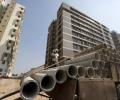
A bench headed by Justice R F Nariman, which disposed of a batch of over 180 petitions filed by various builders, said the RERA act which regulates the real estate sector should be read harmoniously with the amendments made in the IBC and in case of conflict the code will prevail.

In a significant verdict, the Supreme Court on Wednesday set aside the National Company Law Appellate Tribunal's (NCLAT) verdict that had stopped insolvency proceedings against embattled ed-tech firm Byju's. A bench of Chief Justice D Y Chandrachud, and Justices J B Pardiwala and Manoj Misra also reversed the order of the NCLAT approving Byju's Rs 158.9 crore dues settlement with the Board of Control for Cricket in India (BCCI) and directed the cricket board to deposit the settlement amount of Rs 158.9 crore with a committee of creditors.
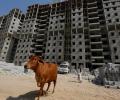
Property buyers fund the project cost and the entire debt and entire equity servicing, and yet, have no locus standi in the IBC process, points out Debashis Basu.

Around Rs 1 trillion, or a fifth of the investments made by alternative investment funds (AIFs) are questionable in terms of the intent behind the investments and are under the scanner for circumvention of regulations, said Ananth Narayan, whole-time member of Securities and Exchange Board of India (Sebi). AIFs are pooled investment vehicles that invest in a variety of assets including real estate, startups, unlisted companies, and derivative strategies in the listed space.
Retail investors have put at least Rs 2,296 crore in listed companies facing proceedings under the Insolvency and Bankruptcy Code (IBC). A median such-company had 16,163 retail investors as shareholders many of whom apparently have bought a stake on the hope of making money if the firm revives. They own a fifth of the total stake in the companies under consideration. The analysis looked at 75 listed firms for whom shareholding data was available for March 2022.
Larger firms feel that the smaller players have muddied the waters for the IBC process, leading to excessive regulation of resolution Professionals.

In a significant development, the Supreme Court on Thursday recalled its controversial May 2 verdict that had ordered liquidation of Bhushan Power & Steel Limited (BPSL) while setting aside a resolution plan of JSW Steel Limited for the ailing firm. A bench comprising Chief Justice B R Gavai and Justice Satish Chandra Sharma observed that the May 2 judgment, authored by Justice Bela M Trivedi, since retired, did not "correctly consider the legal position as has been laid down in the catena of judgments".

Mint Road's proposals on banks' M&A funding are cautious even as entrants root for more elbow room, and weigh business models.
The Supreme Court on Friday declared JSW Steel Limited's resolution plan for Bhushan Power & Steel Limited (BPSL) "illegal" and ordered the latter's liquidation, four years after the company was acquired by JSW Steel under the Insolvency and Bankruptcy Code (IBC). Following the ruling, JSW Steel shares fell sharply.

'Buyers should be provided either a fixed possession date or a firm date for the start of construction.'

The time-bound nature of the bankruptcy code, envisaging resolution within 180 to 270 days, would put enormous pressure on the existing judicial infrastructure.

'The Insolvency and Bankruptcy Code cleans up non-performing assets and puts companies in capable and credible hands.'

India's debt recovery and restructuring framework is still a work in progress, even six months after the President's assent to the Insolvency and Bankruptcy Code 2016.

The Union Finance Ministry on Tuesday said that aggregate business of public sector banks (PSBs) has shown strong growth of 11 per cent in the first half of the financial year 2024-25 (H1FY25) to touch Rs 236 trillion. The operating and net profit were also robust. At Rs 1.5 trillion, operating profit grew by 14.4 per cent year-on-year (Y-o-Y) while the net profit saw an impressive 25.6 per cent jump at Rs 85,520 crore in the first half of FY25.

You have to grow, and grow fast - that's the DNA of the JSW group, chairman Sajjan Jindal said as JSW Cement made its debut on the stock market mid-August. The remark captured not just the moment but also the momentum of JSW's growth story.

The Stayzilla episode raises questions over the regulations around the closure of a business, says Sudipto Dey.

Banks have Rs 10 trillion in stressed assets - Rs 7.8 trillion of bad loans and Rs 2.2 trillion of restructured ones.

Crisis-hit Go First has sought various interim directions from the National Company Law Tribunal, including restraining lessors from taking back aircraft and regulator DGCA from taking any adverse action against the airline. The Wadia group-owned airline, which has liabilities worth Rs 11,463 crore, has sought voluntary insolvency resolution proceedings and the plea is set to be heard by the Delhi bench of the NCLT on Thursday. Go First has cancelled all its flights for three days starting from May 3.

'That is going to have an impact on literally every one, whether you buy a toothpaste, a safety pin, a car, shoes or medicines or you go to a diagnostic centre.'

The insolvency process of debt-ridden Reliance Capital Ltd (RCL) on Tuesday hit a roadblock as the NCLT Mumbai has stayed the resolution process on the plea of Torrent Group. The stay order was issued by the National Company Law Tribunal (NCLT) as the Ahmedabad-based Torrent Group challenged the revised bid from Hinduja Group, sources said. Torrent Group, which emerged as the highest bidder with an Rs 8,640 crore offer, had moved the NCLT-Mumbai against Hinduja Group's late revised bid, which it had submitted after the completion of the e-auction process on December 21.

Anil Ambani had given a personal guarantee to the loans given by SBI to Reliance Communications and Reliance Infratel in August 2016.
